When we took Ripley to our vet at the start of January we were thinking there was a particularly stubborn grass seed, ingrown hair or similar due to its position on her paw slightly between the middle toes. This is a very common place for lumps to form when the body is reacting to something unwanted that has pierced and embedded in the skin.
However after a week of antibiotics the lump looked pretty much unchanged although Ripley’s lymph nodes on her neck had gone down indicating there had been a little inflammation the antibiotics had helped.
The lump was the same size and still ultimately solid which concerned our vet. For some reason I’d been expecting our vet to suggest another course of antibiotics but instead she said she was concerned the size and harness of the lump might indicate it is carcinoma rather than a grass seed that can be removed by cutting into the lump and foot.
You know when you’ve had that dreaded thought you have when there’s the slight possibility of a worse case scenario but it’s highly unlikely. I’d already been aware from our first consult that a carcinoma was further down the list of possible causes but you naturally push the thought back and try to not worry.
Now I don’t like to show worry in front of my dogs especially when at the vets as I don’t want them to feel there is anything wrong especially associated with somewhere like the vets so outwardly I asked questions and was pretty matter of fact but internally I was already a bundle of worry! I’m not typically negative or think the worse but there is something that has been on my mind since loose my previous Norwich Terrier, Taylor, to a cancer called Hemangiosarcoma 8 years ago.
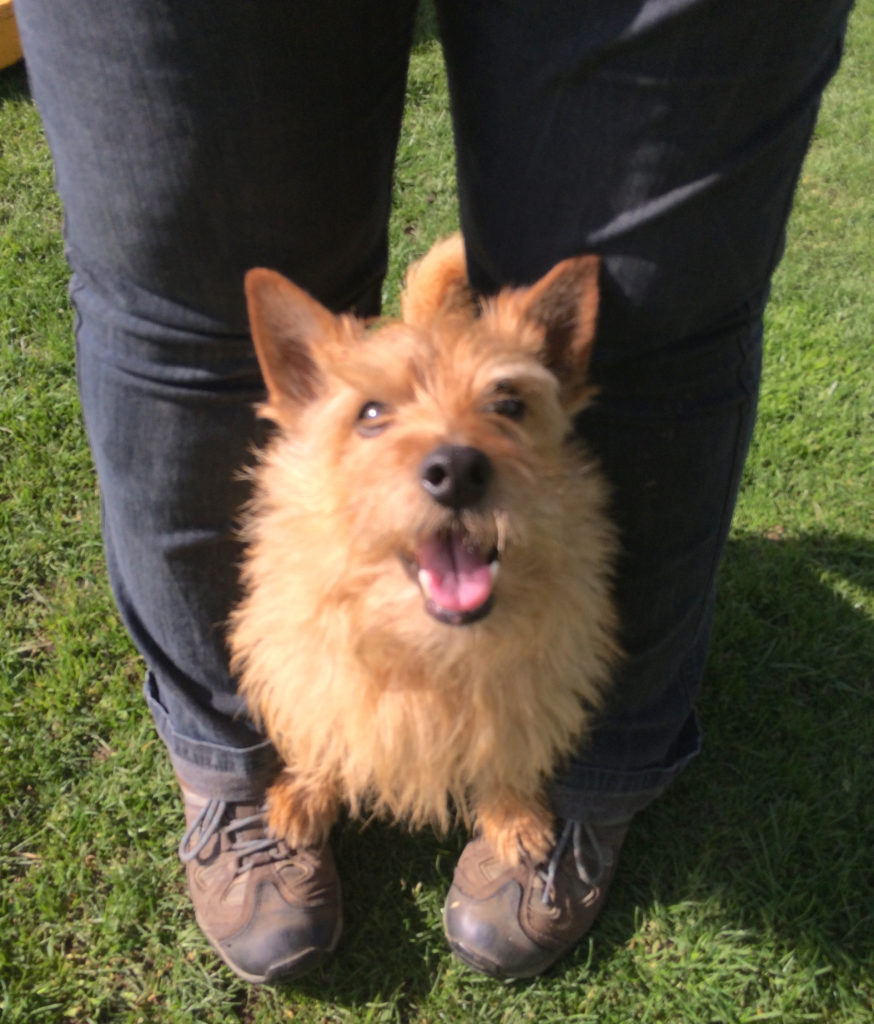
Taylor was just past his 13th birthday when I noticed the hard lump on his shoulder that literally appeared one day. Vet check confirmed it was likely a tumour and while doing a full examination struggled to take his temperature – rectally. On closer examination the reason the thermometer wasn’t going where it should was because Taylor’s hidden primary tumour was outside his stomach and took up most of the space in his abdomen. The vet could feel the tumour with his finger while it was in Taylor bum the tumour was so huge!
I won’t go into all the details of Taylor’s cancer journey here, that’s for another time, but after 7 months of ticking off Taylor’s bucket list we said goodbye to him. Since then, knowing HSA (Hemangiosarcoma) can be genetic to a degree and then finding out Taylor’s dad had passed of the same thing I was worried about Merlin, being Taylor’s actual nephew.
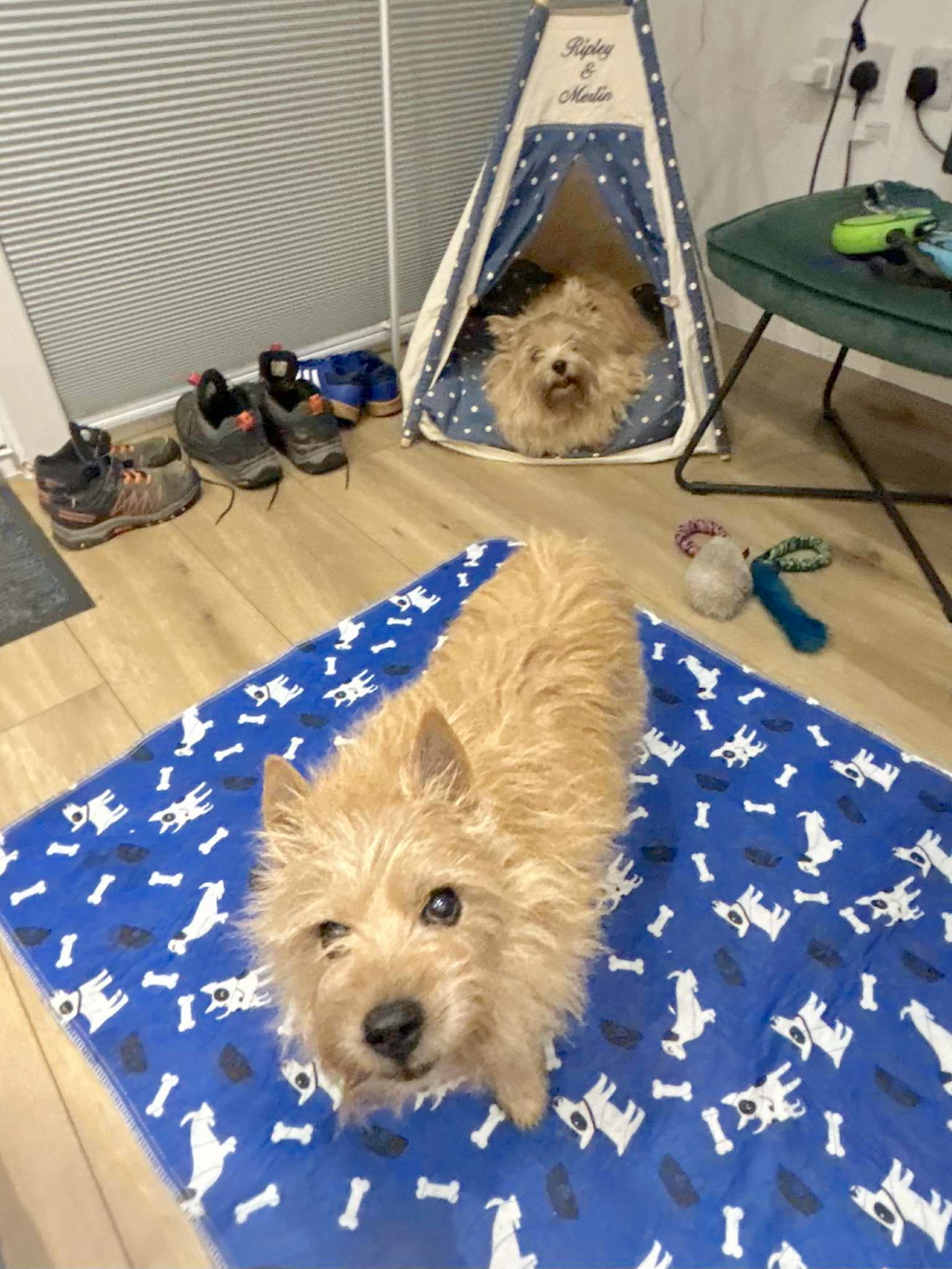
Merlin just had his 14th birthday and I can’t explain how nervous his 13th year made me – I know just because Taylor was 13 it doesn’t mean Merlin would go age 13 but it was big for me and reaching 14 somehow helped me feel less worried. But I hadn’t counted on Ripley potentially being the dog I needed to watch out for!
Ripley will be 8 in May so still young overall and for a terrier very young. She’s happy, laid back, no general health issues. However she is spayed. Yes, spaying can mean removing the risk of some cancers linked to the womb and reproductive system. However opening a dog up for surgery and spaying can also be a trigger for other types of cancers – more types than would be likely with an entire female dog. Spaying Ripley age 3 was not done in a snap decision but done as she struggled so much with her previous 6 seasons plus had several phantom pregnancies that caused her distress too. We decided spaying was kinder to her but I had initially planned to keep her entire based on my own research into cancers etc.
So that’s why hearing ‘carcinoma’ from our vet was a huge blow. I know treatments are available and procedures can be fantastic but while I focused my worries on Merlin I wasn’t trying to prevent anything specific with Ripley.
Anyway, back to Ripley and preparing her for her surgery!
So while discussing Ripley’s lump with the vet we decided it needed removing and the it can be biopsied. Booked Ripley in for a week later and talked about the possibility that the results of the biopsy could show it’s an aggressive tumour and not all of it was taken by the surgery as between the toes is a difficult area. As it is the surgery Ripley is having today I’m aware they will try and keep all her toes but I’ve said if they need to take a toe to fully remove the lump then do it. The vet went on to say that if the mass hadn’t been fully removed and it is aggressive then they will need to look at removing her … I said foot, the vet said leg!! The whole leg!
I was prepared for toes or a paw but the whole front leg was a shock!! I know how to work with a tripawd dog (three legs) but a front leg missing is a bit more difficult than back leg plus Ripley enjoys so many tricks with her front paws I felt so sad for her!
We then returned to the actual surgery. The mass will be removed and the skin pulled over the gap will most likely cause her middle two toes to be tight together. Then she will need to let it heal without licking it – Ripley is a dog who loves to lick anything and anyone!! She has always enjoyed some paw licking too. Our vet said it will be important that the bandage initially doesn’t get wet while she is outside for the toilet etc and then that she doesn’t lick her wound. I replied that I have already got a plan in mind!
The Plan!
There are various ways to prevent a dog licking their paw; collars like the big plastic cone or an inflatable version to stop dogs actually reaching the paw, using a muzzle so the tongue can’t make contact with the paw, or using dog socks and boots.
I decided that the least invasive or stressful option for Ripley would be a sock over her paw. Socks would be lighter for general wearing around the house and if need be a boot for outside to prevent it getting wet.
But why wait for Ripley’s first time with a sock on her paw to be when she also has a painful wound in that paw and probably some discomfort from the paw and leg being moved about during surgery.
So we bought some small dog socks with Velcro fastening, and I also got one of my old unused socks that had been donated at work too. One trick to introducing boots and socks to dogs is to start with a bigger size which is easier for the paw to go in and therefore easier for dogs to learn with plus less faffing about from us trying to force a small fitted sock on!
I took the circular lid from a packaging tube and put my old sock inside and stretched the top of the sock over the top of the lid to hold it open. This means I can work on the paw going into the top of the sock more easily and with one hand and have the other hand to reward and praise with instantly.
We started with ‘give paw’ and asked for a paw to land in the lid and on the sock – not worrying about getting the paw inside at this stage, or which paw was offered. Eventually I wanted the front left paw.
Next session I started being more precise so held the lid in a way that meant when Ripley gave her paw it went into the top of the sock so she could feel the change with the sock around her paw, even loosely. Her aim was getting good and she was happy to offer her poorly paw!
After a few short sessions of this I decided to move on to a dog sock; I have some large size at training I was given previously so had one to hand. As she already knew how to aim her paw into the other open sock I could now use both hands to hold the large size dog sock open and when I asked for ‘Hide Paw’ Ripley knew how to lift her paw, aim for the sock opening and push her paw into the sock! In return for treats of course!
Few repetitions in a session, a few short sessions later and a as soon as I pick up the dog sock Ripley, along with Merlin and Pepper Potts, are excited to offer a paw to put in to the sock in return for their treats! Success for this stage!!
But what I’m heading for is for Ripley to be comfortable with me putting her small size dog on her paw while it’s healing to prevent her nibbling or licking the wound. The small size is a lot smaller overall and of course tighter so I need to hold it open as well as I can to help Ripley start putting her sore paw in and then I can gently move the sock up her leg.

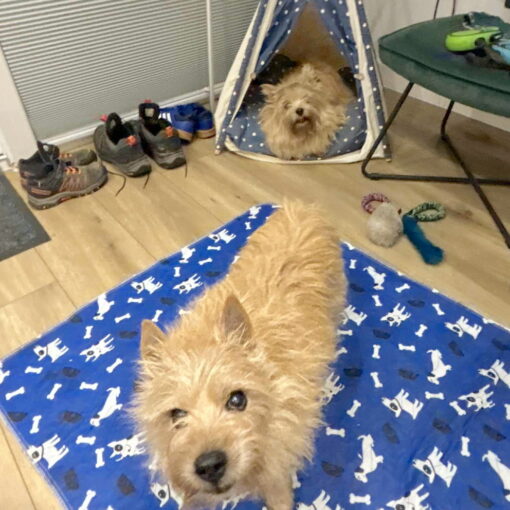
However it wasn’t just the paw and sock training that I did to prepare Ripley for her day at the vets. Being somewhere new, with unknown people, hearing all kinds of sounds including potentially other dogs in distress, the scent of medications and more is overwhelming for many dogs. Ripley, along with all of my dogs, is crate trained. This means not just able to go into a crate for a short time but is actively happy to be in a crate, will settle quickly, sleep in there and takes herself in randomly too. Being crate trained means a day at the vets or a stay overnight is so much less stressful for a dog as they understand that being in a crate isn’t a punishment, it’s a safe space for them to be in and that you will be coming back. So a little crate practise doesn’t hurt.
I also took a spare small blanket to bed with me the night before to leave familiar scent on it for Ripley. Although she is very chilled and loves people so would be fine at the vets I didn’t see any harm in giving her additional confidence with familiar scent! I also did a single spray of Pet Remedy on the blanket in a corner so she had the choice of laying on that part for extra reassurance.
On the way to the vets – just over half an hour – I had Violet Leaf essential oil open in the van. This is known for being excellent with calming and soothing before stressful events including going to the vets. No harm in giving Ripley as much support as I can!
I also had planned ahead in case the mass came back as aggressive and not all had been removed so actually worked on Ripley doing everyday things without using her front left paw as much. Sounds crazy? As a Canine Fitness Trainer I know how important it is for dogs without a leg to learn to use their core strength more, to understand how to balance etc. We did sit to stand and down to stand while Ripley gave me her paw. This is something I’ve done before with my dogs fitness but not for some months. I also did them with Ripley’s other paw too. She found it difficult at first but then soon worked it out. There are always going to be surprised and events we cannot plan for but when we have some clues ahead of time and we know how we can help, then why not do what we can!
The Big Day – Surgery
We saw our vet first who went through everything. I ticked the boxes to ask for additional pre checks (usually offered for older dogs but I figured if we can have it, then do it!) and for additional fluids during surgery which helps blood flow around the body taking oxygen to the organs when they need that extra help! I’m so glad I did! When it was time to leave I popped Ripley on the floor and handed the lead to Georgina the vet. I didn’t make a fuss, or get upset, despite internally feeling awful! I just said bye to Ripley and thankyou to the vet and went to go. I watched Ripley toddle off with the vet, pausing to say help to other vets and nurses on the way. She didn’t look back at me at all! Sad for me but excellent for Ripley as showed she wasn’t upset or confused.
Then the wait. Generally you don’t want to hear before about 2/3pm as no news is good news. So just after 3pm I called to check in. Vet will call back. Call back was not what I was prepared for; Vet said first off Ripley is awake and doing well. She has extra fluids and is being watched by a nurse. Fluids and nurse care aren’t usually expected.
Then I’m told that during surgery her heart stopped so they had to give her cpr and adrenalin and managed to get her to come round. Apparently she turned a really horrible colour too. As a result they didn’t get to close the wound with sutures as they just wanted to wake her up so she has 5 staples and bandages.
She will need extra checkups for her heart as they don’t know why it stopped. There’s no murmur or anything obvious but it has an irregular beat now which wasn’t there before surgery. Wasn’t there in any other past checkups or when she was spayed a few years ago so completely new!
The big lump contained a big ball of her fur but they have no idea how. That’s removed along with some spare tissue etc. They have half the furball which has tissue attached so that’s being sent off for testing to be sure there’s also no carcinoma in there but non of the team were expecting anything like this inside the lump! We have the other half in a tube and it’s so bizarre! They assume she someone balled up a load of fur under her paw, had some kind of wound within the pads and it healed over the fur?
Ripley has an appointment on Friday with the cardiologist to try and work out what’s wrong with her heart to try and help her – no anaesthetic as we don’t know if she reacted to that! So in at 8am again and nothing to eat despite not having anaesthetic – she doesn’t like mornings!!
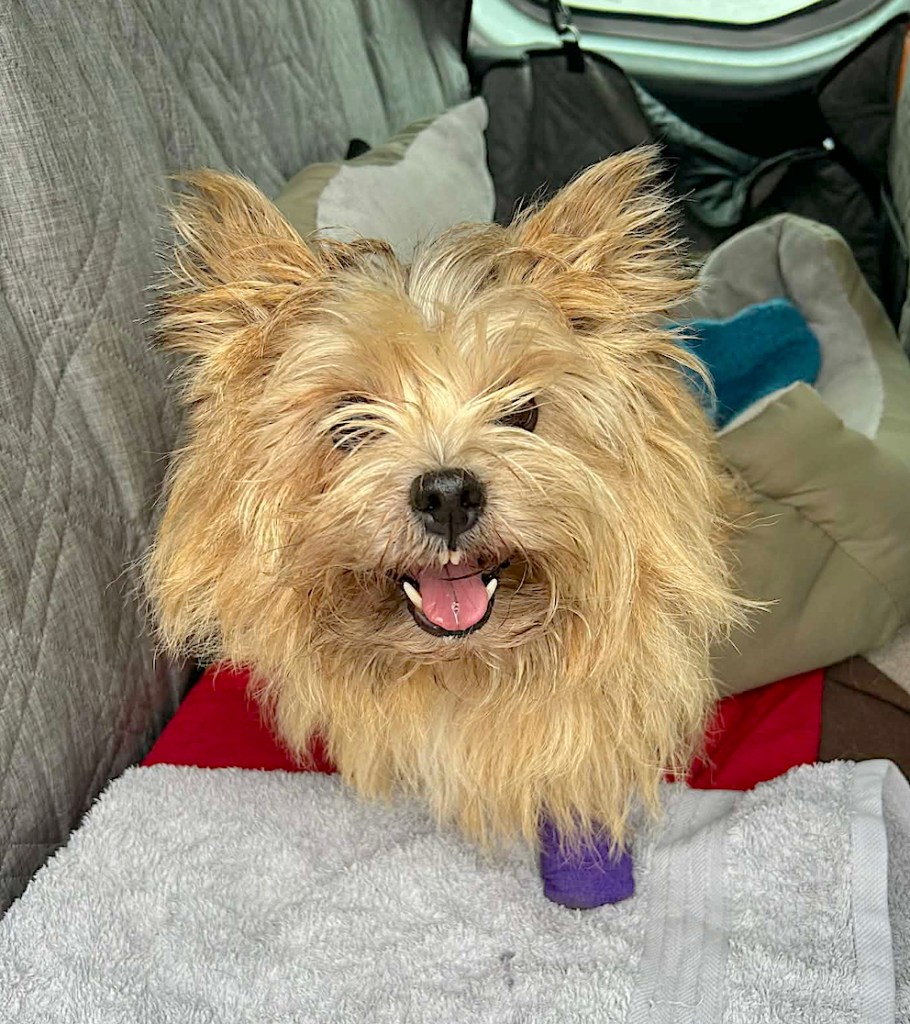
The preparation with the socks has been useful. Despite the fact she has a huge bandage system in place so doesn’t need anything on it to prevent her licking, she does need to keep the bandages clean and dry and we are having a pretty rainy winter so far! So each time she needs to go toilet I ask her to wait and give paw and she pops the bandaged paw into the large size dog sock to wear in the garden, and I take it off and hang it to dry when she comes back in. In fact the vet Friday commented on what a good job of keeping the bandages dry we were doing!! Hurrah!
Once the staples come out and the bandages aren’t needed she will then have the smaller size new socks with velcro to put over the paw if she does try licking it. She’s been brilliant with leaving her bandages alone and hasn’t need an additional collar etc at all. It’s always worth trying your dog – don’t just assume they need a buster collar etc. For example try taking it off for meals, during play with a toy or if your dog is really tired and having a nap when you are still around. It might be they only have the collar etc off for 5-10 mins but that’s going to be relief for the neck for sure. If it turns out your dog isn’t interested in their wound etc then they might be able to have the collar off for an hour or two and put on overnight perhaps or when you need to leave them at home. Honestly, I’ve had 4 dogs neutered over the years, tumours removed from stomach and shoulder, nails ripped out – not once have I needed to have a collar etc on any of my dogs. Leucillin spray to keep wounds clean and prevent infection and that’s about it!
Preparing for the Vets:
So as a recap – ways I prepare my dogs for a day at the vets does vary depending on what is being done, but generally might include:
- Recap on Crate Training – making their crate cosy, popping them in while I’m doing stuff nearby such as replying to emails
- If they are likely to need something like a smart collar, inflatable collar or socks over paws have a practise of them wearing these using rewards and keeping it all positive. Imagine the first time you wear a heavy plastic cone collar is when you also are sluggish from anaesthetic, have stitches, are uncomfortable etc! I also practise with a body suit if they are being neutered as this can take away the need for a cone.
- Similarly I muzzle train my dogs, no matter their age, background or how much they love people!! Dogs in pain or when terrified because they have just woken from surgery go into self preservation mode and this can often mean using their mouths to get people away. This then leads to a basket style muzzle being put on a dog and if they haven’t experienced this before it’s just adding to their trauma! Muzzle train your dog so they come to love the muzzle. They are not a taboo item, they help dogs in so many ways to stay safe and healthy. This way it will be easier to get a muzzle on your dog if needed so vets can treat your dog, it will be familiar and less stressful for your dog and prevents your dog hurting themselves trying to bite.
- I do ensure their bum and tail are trimmed short as often after anaesthetic there can be upset tummies!
- I find a small blanket that I’m not attached to (I imagine Ripley’s blanket had blood on it as she needed washing!) and sleep with it on the bed or sit on it while working the day or night before. This puts my scent and the other dogs’ scent on there for a familiar feel.
- I use Pet Remedy Spray by just doing one spray on a corner of the blanket so they can move away if they don’t want the scent or closer if they do. I use zoopharmacognosy (self selection) and it’s essential dogs can choose what they use scent wise.
- I also ensure I have organise live yoghurt ready for after surgery / during having antibiotics. Live organic yoghurt is known for helping the body remove toxins which includes anaesthetic still in the system once dogs come home. If I don’t have the yoghurt I’ll use homeopathic Thuja, but they like the yoghurt!
- Have Leucillin Spray or Colloidal Silver Spray handy to use on wounds to help healing and prevent infection.
Talk to your vet about what is going to happen. Ask all questions and if you’re not sure let them know. Even routine surgery, such as spay and neuter, are still operations which carry risks so check how you can help your dog before and after, and work with your vet for the smoothest outcome. You can ask what preparation they suggest as well.
Additionally I do recommend doing a canine first aid course, online or in person. We host them each summer with Rachel Bean RVN plus Rachel has a fantastic online version too. The link to take a look is HERE
Pet Remedy has various formats and we recommend it for dogs who can be stressed, worried, anxious, overly excitable and more. Take a look using our special code here
We have advice on Muzzle training too! Our Youtube Tutorial is HERE and our fun Muzzle Training games is HERE
We are also big fans of The Muzzle Movement for muzzles that are the perfect fit – try our affiliate link
Thankyou for reading
Joe Nutkins
Dog Training for Essex & Suffolk
If you’d like to read more how about our Blog on helping your dog be calmer during Vet Visits