Dog Fitness and Canine Conditioning is where we work with dogs and owners on specific exercises that we know help warm up, strengthen, aid recovery of injury, help with movement and function as well as cooling down correctly after activity too. The exercises are tailored for each dog’s needs and abilities to ensure we are achieving all of those goals.
As a Certified Professional Canine Fitness Trainer since 2014 I have worked with dogs from Puppy to Senior ages to help prepare dogs for future sports and activity, to help maintain strength to avoid injury or aid recovery, and to help prepare dogs for their futures to help keep them mobile for longer.
I’ve also been thankful to be able to identify areas of discomfort in dogs I see regularly so owners can show their vet and get the correct diagnosis; especially important when a dog doesn’t show pain in way we expect so the correct area isn’t being looked at by the professionals! Understanding movement, how pain affects the body and how dog’s adjust and adapt means I can often see where an issue starts from, not just where it’s showing now after a dog has been adjusting for some time!

Credit Arthouse Photography
Exercises we use for most sessions tend to start with groundwork; movement and stretches on the ground to work on steadiness, body awareness, balance and coordination. We progress to exercises that use sturdy equipment for strengthening and targetting muscle groups etc. Gradually increasing the challenges as dogs become stronger and are ready but starting with low height items that dogs can navigate easily and safely.
Making exercises more challenging may involve adding more repetitions or sets into a session, adding some height, lengthening a sequence of cavaletti poles or items to work on and eventually may also include the use of balance equipment like Balance Discs, Peanuts and Paw Pods, depending on what the goal is for each dog.
Exercises are recapped to owners with suggestions on ways to recreate at home as although we have lots of specialist equipment to use at training most people do not have access to these once home so household equipment can be used safely and effectively. For example Sofa cushions, folded blankets, crate beds etc can be used to put paws on instead of a balance disc.

I also advice on ways environment can affect a dog and how small changes can make a big difference. Being able to support owners with small changes they can do themselves that don’t cost a lot of money can really boost owners’ confidence in their own way of helping their dog as well as making a big difference for the dog too. There are quite a few adjustments that can usually be made easily even on the same day as we start our first Fitness session.
Fitness for Dogs can be used alongside regular walks as additional benefits, or for when a dog cannot have walks or doesn’t want them due to the weather! Gentle fitness can be used after physio signing off to continue building up the body as well as during winter while there may be less options for walks, dog activities etc.
Dogs tend to find the range of exercises, the mental challenge and the physical tasks a lot of fun plus they get to spend quality time working on the with their owner. What’s not to like?!
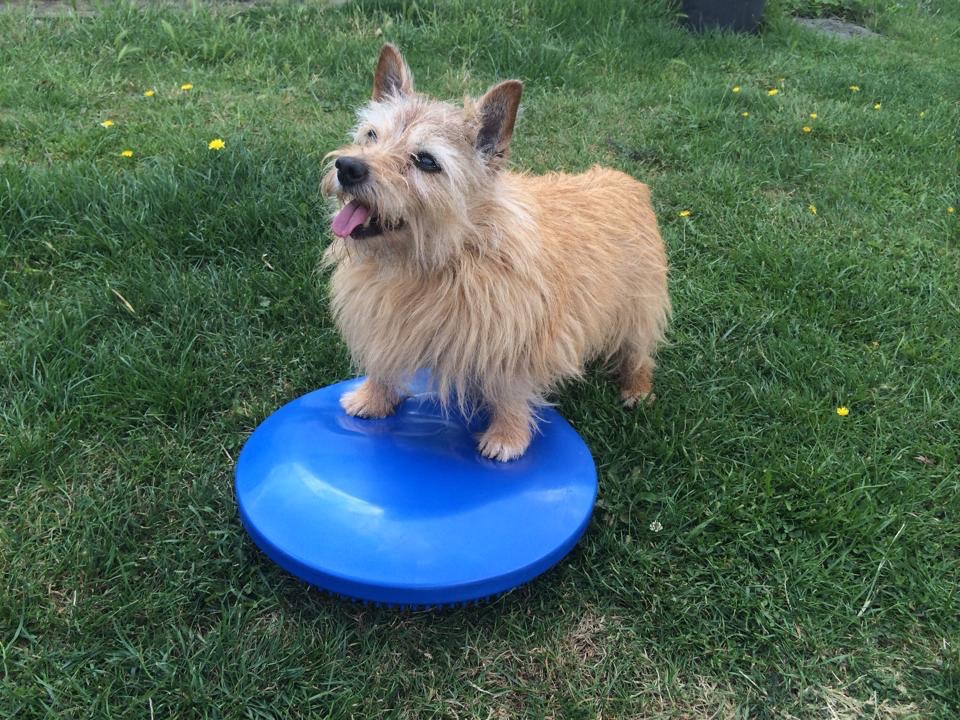
Canine Fitness and Conditioning doesn’t need to take a huge amount of time. Working on a few select exercises a few times a week means targeting specific areas of the body that may need strengthening, some movement, encouraging weight bearing etc which can really make a difference to dogs. It is more than possible to add in 10-15 minutes of exercises 2-3 times a week regularly and start seeing benefits with your dog before a month is up. Obviously doing several sessions a week will show benefits even sooner.
Important aspects to include in a dog workout are:
- Warming Up – preparing the body all over for activity, preventing injury, helping recovery afterwards
- Main Exercises – consider the goal of the session? Muscle Tone on Rear Legs? Working the Core? Movement on front Toes?
- Stretching as part of the Cool Down – to help the body return to it’s normal state properly and lower the risk of soreness later on.
Here’s an example of a General Fitness Workout:
Exercises for dogs without known injuries or joint issues may include:
- Paw Targetting as part of a warm up
- Weight shifting using nose targets
- Walking back to an item – for body awareness, strengthening, proprioception
- Pivoting – choosing one of various styles of pivots to work the side muscles front and rear
- Rear Foot Target (individual) – more strengthening, body awareness, balance
- Dynamic Stretches – as part of the cool down to help with range of motion, balance and returning the body to normal naturally
How can I get started in my dog’s Conditioning?
Take a look at our Facebook Group for Canine Conditioning to see more of what dogs might be working on or on our Facebook Dog Training Page also – links to there are here:
General Dog Training Page Click here
K9 Conditioning FB Group Click here
If you are here as part of our latest online Free Dog Fitness Challenges then you’ll be learning lots this week!
Take a look as the information about Canine Fitness on our website HERE
Contact us for more details on how we can help you and your dog with options such as Fitness Classes, 1-2-1 Fitness Training, Online Masterclasses and more.
Thankyou for reading – we are here to support you and your dog at any stage.
Written by Joe Nutkins, Certified Professional Canine Fitness Trainer