Bringing home your newly adopted rescue dog, rehome dog or foster can be exciting, and also daunting!
There are often lots of recommendations for new owners from the rescues or rehoming centre as well as rules to remember to help your new dog settle in and be safe.
There is a theory known as the 3-3-3 rule which suggests peak times to focus on with a newly adopted or fostered dog. These are:
First 3 Days – Time to decompress, sleep, recover, no pressure to learn or interact with the new family
First 3 Weeks – Time to learn about their new home and family, may have more confidence
First 3 Months – Time to settle in, build trust and relationships with family, likely to be willing to try training
Overall these are very useful guidelines and worth knowing to help understand your dog and their needs. However dogs are very individual and some may need much longer then these days, weeks and months even into years to work through past trauma, anxiety, fear etc while others may settle in and adapt to their new home in just a few days or weeks.
These first few days are pretty important to your dog and to you as we want to help in any way we can but often our caring interferes with a rescue or foster dog’s ability to settle and decompress.
We have some advice for the first few days for you – adapt as needed and work with the dog you have in front of you.
Day 1:
- Have their sleeping / resting area ready for them
- Ensure they have a quiet space to go to and people don’t crowd
- Ask people wanting to visit to wait a few weeks to give your dog a chance
- Offer meals but try a variety of types
- Take out to toilet regularly, every 1-2 hours unless they are asleep
Depending on the time you bring your new adopted dog home you may have all day or a few hours but this still classes as day one. If you are adopting a dog from overseas you may receive them overnight so start day one after a sleep!
Ideally you will already have your new dog’s sleeping area set up; puppy pen, crate, bed in a quiet area, water bowl in place etc. if not then get this done as soon as you can. If you use Pet Remedy or Rescue Remedy to help with calming have this sprayed, plugged in or in the water but also offer plain water too.
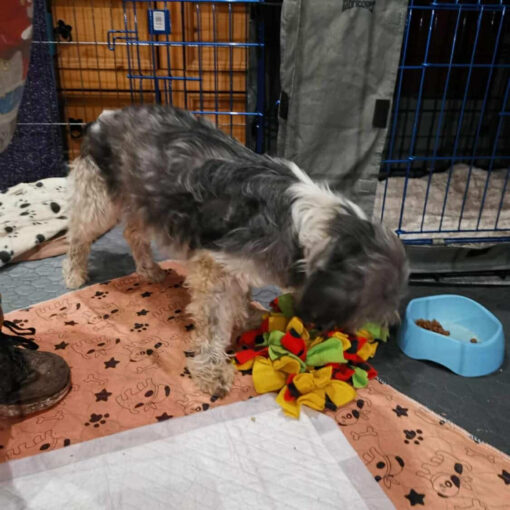
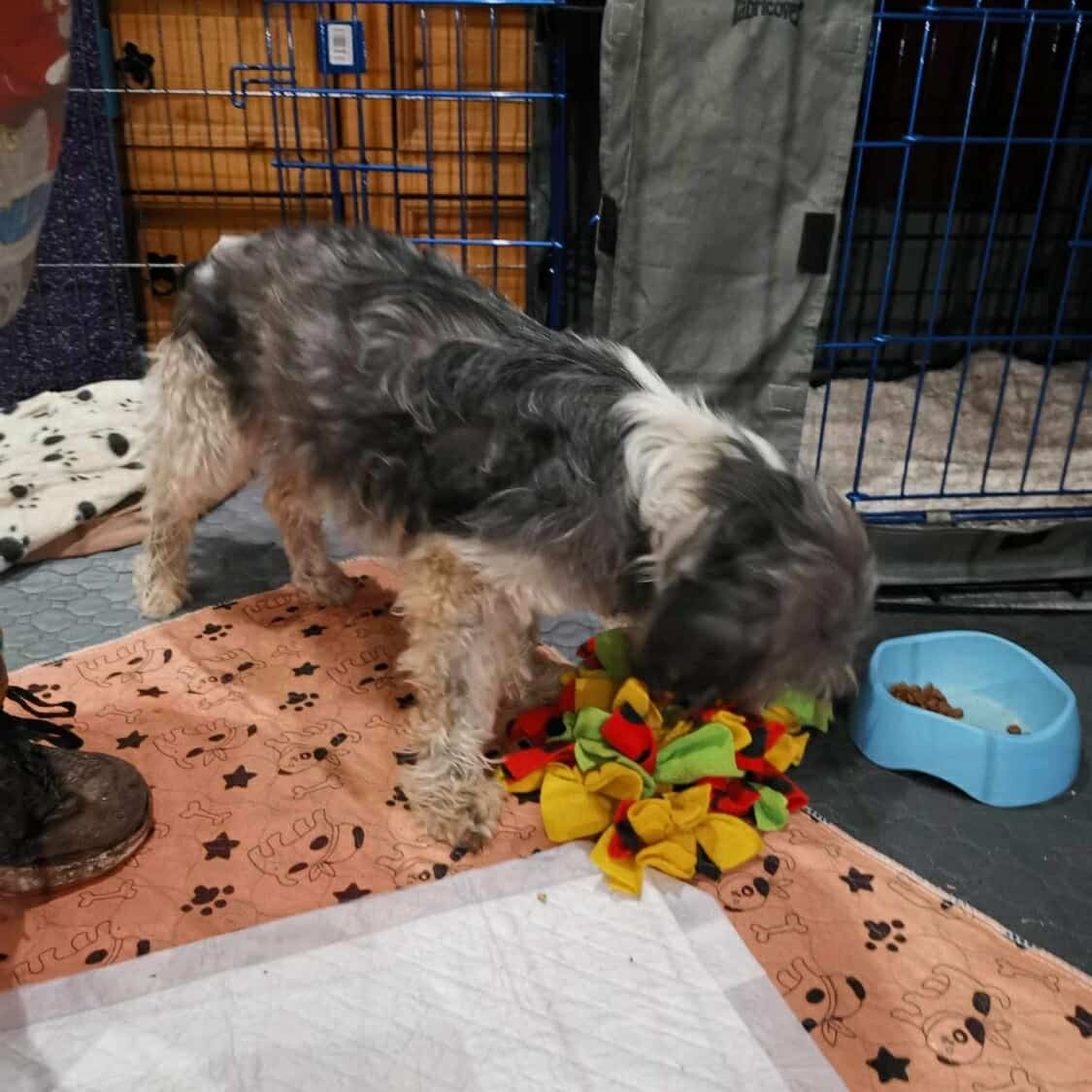
When your dog comes to you those first few hours are full of new stimulus such as sounds, some they won’t have heard before, smells and scents, furniture, possibly other people or pets. It’s exhausting taking all this in without factoring in any travel they have had to get to you too. Ensure they are shown where there is a quiet cosy place to go to if they choose. You can have toys here in case your dog wants to play or needs something to chew. A snuffle may with small treats or kibble in can be interesting to an adopted dog. Ensure no other pets are nearby when you are giving food or toys in case there are resource guarding issues early on.
On occasion and depending on a dog’s character and circumstances on why they are rehomed a dog may go to their new home and settle straight in, but more often than not all the changes of routine, home, family etc are stressful and they may be quiet, shut down and just need some patience.
Try to not overcrowd them and if you have family or friends asking to come visit please put them off not just on day one but for the first week at least – two if possible. Ensure all household members know to let your new dog settle without constantly trying to stroke them, offer them food or toys, encouraging them to play etc as this in itself can be tiring and stressful too!
Offer meals, and it can be useful to know what they were being fed before coming to you so you can offer something familiar but also have a couple of options. My rescue dog would only eat Ox Tripe Mince for the whole first month! I tried various kibble, canned, cooked and other raw but she wouldn’t touch anything else! Offer food in a bowl or on a plate and leave it to them but you could try being nearby (outside the puppy pen if that’s where they are) in case they feel comfortable with company but if they won’t eat also try leaving them to it to reduce pressure.
Take them out into the garden for a sniff and chance for toilet every couple of hours. Most adoption centres will ask that they are on lead for the first couple of weeks so adhere to this but let them mooch around the garden. You can try asking for toileting words in case they were taught this but finding the right word isn’t easy – toilet, busy, be busy, be quick, wee wee, twiddles – all words I’ve heard owners use!
On this first day of you have other household pets you can see if they interact through a baby gate or puppy pen or in the garden but if your new dog keeps turning away, lifting a lip, giving a grumble etc they are giving clear signs they are not comfortable so move your other pet away. This is the same for people too. Even when dogs are described by a rescue as being good with dogs or pets they might act differently on these first few days.
It’s mostly space and time they need on day one, plus while we observe we are learning what they notice, worry about, like to eat etc.
That first night show them where their bed is – it can be earlier than when you are going to bed. Remember they will be tired but also have adrenaline flowing as a defence mechanism so may not settle quickly. Leave them to it, you may opt to leave a light on but that is up to you. If they have been in a rescue centre they would have been in darkness overnight.
Day 2:
- Continue giving them space and let them observe you and their surroundings
- Continue taking them outside to toilet regularly
- Offer meals – try in a bowl, on a mat, different textures etc
- Get on with your usual daily routine so your dog can observe, if they come to you talk, offer to stroke
Hopefully you have gotten some sleep! When you get up do your usual morning routine without going up to your new dog and leaning over them, having a chat with them and trying to encourage them to interact. It will take a few days to decompress, get through the fatigue etc. instead you can still say hello and check on them but give some space. Open the back door and take outside for toilet.
Let them have time to sniff about and find somewhere to toilet. You can bring them back in and offer water or food and then take back out in 5 to 10 mins as sometimes the change in location can stimulate the colon. If you have other pets ensure they do not keep going up to your new dog and sniffing them, getting in their face etc – although if they look interested, are trying to see them too, and are not looking worried then interaction can be done but keep an eye on body changes as sometimes a quick interaction is enough.
Bring in and offer breakfast, again give them space to eat but see if they want you in sight or night to eat.
It’s another day of giving them time to explore their new home, see what they like the look of with toys, treats in snuffle mats, licky mats etc.
Again no visitors ideally and no walks yet either – it’s these first few days and weeks that rescue dogs slip leads and harnesses and disappear where they panic. You can spend time in the garden with them if you want them to have exercise. Try toys outside. But again if they are not interested in interaction just give them a chance to settle. Interaction will come quicker when it’s not forced.
Your new dog may come to you for interaction – so see what they might want! Stroke their side, chest, offer toys, talk to them. Move away and call them to you. Sit on the floor or on a stool and call them to you and see if they want a little fuss. Allow them to move away if they want.
Let them have plenty of chances to go back to bed and rest. If you need to go out try to make it short, pop them in one room or even better in a pen or crate so they feel safe and less chance of injuring themselves if they worry. Using Pet Remedy or Rescue Remedy can help with this but start using day one and continue; plugins stay plugged in and switched on, spray is sprayed each morning and evening.
Offer meals a couple of times a day such as morning, lunch time and evening meal and take out to toilet after. If they haven’t yet eaten you may need to try other types of food – flavour, texture etc. But it can also take a few days to be ready to eat and dogs typically don’t starve themselves so try to no panic if they are not eating properly yet. However you can let your adoption people know.
Evening will be similar to day one. Get them settled in their space before you need to go to bed and then leave them to it.
Day 3:
- Similar to Day 2 – no visitors, walks, regular toilet trips
- If they start coming close to you try to not ‘meet them in the middle’ – let them come all the way to you
- You may see more relaxed body language – appreciate from a little distance
- Consider offering scent or try Pet Remedy (link here) to help with settling and relaxing
Very similar to Day 2, no visitors, no walks yet, regular toilet trips into the garden on lead. See if they want to interact but also give option of resting.
By day 3 you may start seeing some character such as stretching out more, laying on their side instead of curled up, vocalisation such as a playful bark, interacting with toys etc.
Having had space and time they will have had chance to assess their surroundings and new family and see that no one is trying to do anything they don’t like, no pressure is on them to perform etc so they are more likely to try interacting more. If they don’t on day 3 remember it’s only their 3rd day of entire lifestyle changes! Continue giving space and time, contact your adoption centre if you feel you need some reassurance and you will find they will be able to relax and settle when ready.
If your dog starts coming to you and sniffing you, leans on you when sitting, comes closer etc it can be really exciting and we instinctively want to stroke them, move closer, give them a kiss etc. But if they haven’t come right up to you they are not ready and us moving closer is more likely to make them move away again and loose a little trust. If they do come close to you bear in mind they might be asking for interaction or they might just want to be close but aren’t expecting to be stroked so may move away again if you stroke them. You can lower a hand for them to sniff, run the back of your hand down their shoulder / side of body (not on the head or face – super intrusive!) a little and see if they are ok with that.
As an additional method I always use when I adopt a dog, chicken, ferret or parrot is Zoopharmacognosy (self selection) where we offer various scent in the form of herbs and flowers, essential oils and hydrosols. When I say offer we just open the bottle or bag and leave nearby so pets can sniff them. They can smell better than us so don’t need them right in their face! If it helps they will sniff, lick lips, yawn a lot, move closer. If they don’t need it they will move away. There are practitioners who can help online but if you already use scent you can try having something open one side of the room – ensure your new dog can move away if they want to.

Here is a link to an article on Newsweek I was asked to contribute on that looks at the first three days with a rescue, rehome or foster dog. Article is written by Lucy
Link to Rescue Dog and Foster Dog Article
Good luck with your new dog settling in and enjoy the companionship you will receive by giving your new dog a loving home and family!
You may be interested to know we have an online beginner dogs Lifeskills Masterclass available. This provides you with foundation dog training exercises that are shown in video tutorial format with the opportunity to ask questions, send in videos of your dog for feedback etc. It’s a one off fee and you have lifetime access so can go back any time you like. This is a really great way to start working on some nice foundations and safety exercises with your dog at home in your own space, at times that work for you, without worrying about travelling, being nervous near other people or dogs, other people and dogs coming too close etc.
To have a look at our Beginners Lifeskills Masterclass the link is here plus use code “Rescue50” to enrol for half price as a thankyou from us for giving your dog a new loving home. LIFESKILLS MASTERCLASS LINK
I hope you found this blog interesting – why not take a look at some of our other blogs with a host of dog topics.
Joe and Team