Although most of our dog walks will be similar throughout the year it can be worth noticing the changes due to each season and how our walks may adjust every few months.
Spring Dog Walks
In Spring we may be thinking of colder weather and flowers starting to appear but there are changes in weather and temperatures.
Dogs who can struggle in Spring tend to not like the sudden changes in temperature and can include double coated breeds and breeds with thicker coats in general. As we’ve seen ourselves this last week temperatures can suddenly change from under 10 degrees to over 15/16 degrees and these sudden changes can feel quite uncomfortable for dogs with a strong coat of fur.
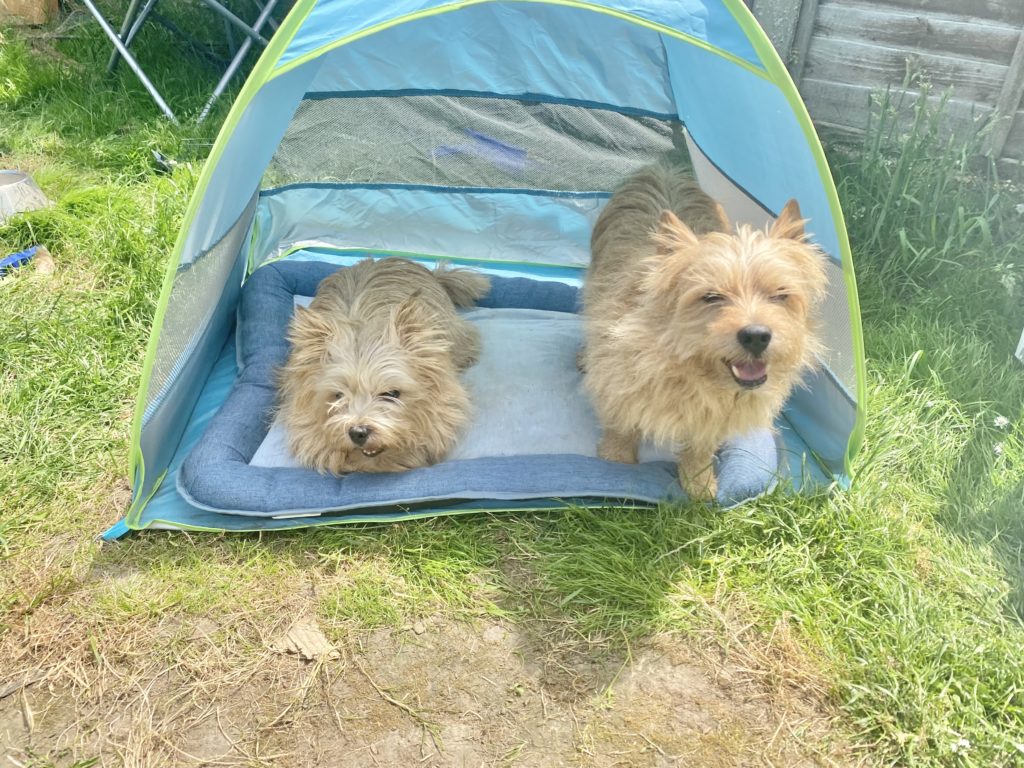
Dogs with longer feathering along the legs and on their paws are likely to find muddy areas on walks hard work and undesirable so changing field walks to pathways, woodland walks to road walks or dog fields to activities at home really helps them not have that discomfort when out. It’s also a good idea to trim the fur around the paws and underneath to prevent mud sticking.
Breeds with thicker coats or fur types that are known to knot more easily can also be harder to keep detangled and so can also be at higher risk of having moisture trapped within the fur next to the skin. This can cause skin issues leading to infection – avoiding walks with lots of puddles or places your dog is going to soaked at can help reduce this risk.
Summer Dog Walks
When we think of Summer we automatically think of hot days and trying to find shade for our dogs (and for us) to walk in. However there are a few additional things to consider.
Dogs with double coats and thicker coats are more at risk over the summer for overheating or suffering with heat stroke and so walks should either be moved to early morning or later evening or replaced with low energy activities at home in the shade. Many dogs are going to prefer cooler and shady walks or places with water that is under trees but only if getting them there is t too hot! but also are likely to struggle with walks at any time on the hottest days.
Hot weather isn’t good for any dog but Brachycephalic breeds with flatter shape faces are at a higher risk of overheating due to the face structure affecting the airways. These breeds don’t always need regular walks when it’s hot but can do activities at home for enrichment and exercise such as gentle conditioning, tricks training etc at cooler times of the day and for shorter periods.
For ideas to work on with your dog at home in the cool check out our Online Monthly Tricks Club and try it for 7 days free: TRICK CLUB

Be careful of paws being burnt on pavements on walks or even on paving slabs, decking or concrete in the garden. Dogs with lighter pads may find these surfaces too hot even when a cooler temperature such as lighter colour dogs as well as puppies who have more tender pads on their feet.
Being lower to the ground many smaller dogs can feel the heat under their bodies as well as on their paws which raises their overall temperature even quicker. This may be more obvious with concrete or tarmac surfaces but this can also be the case with artificial grass, wood or plastic decking and even real grass that has had full sun on it for a while. You can check the surface temperature using your hand for a few seconds but remember we often have a higher tolerance to temperature in our hands than dogs might on their feet.
Lighter dogs can also have more risk of sunburn on their noses and anywhere their fur parts, such as on their head or along their back. You can get dog safe sun protection such as SUN CREAM
Autumn Dog Walks
Be careful if your dog likes to eat things off the floor as autumn can bring acorns, conkers, mushrooms and mould as well as other natural hazards that dogs shouldn’t ingest. All dogs would be at risk especially dogs who love to forage so steering clear of hazards on the ground is highly recommended!
Changing walks from woodland to fields or pathways that are not near trees where things like acorns etc may drop, or away from shaded areas where the grass and bushes stay damp will help dogs stay safe and healthy.

Another alternative for dogs who are more likely to snuffle on walks and eat something that might be toxic to them is to use a well fitted and comfortable muzzle. A muzzle that fits properly can be extremely useful when dogs have had positive muzzle training before using it. Muzzles have come a long way in design and really help dogs with severe allergies and dogs with foraging habits.
To see our Positive Muzzle Training blog click HERE: MUZZLE
For our special link to the brilliant The Muzzle Movement for the Best fitting muzzles ever click MUZZLE MOVEMENT
And for our muzzle training videos click these: MUZZLE TRAINING and MUZZLE GAMES
Autumn can also start being colder and damper as the evenings roll in so evening walks for breeds that feel the cold naturally could be shortened or changed for activities at home if they cannot be moved earlier. Some breeds really feel the cold and damp as they have very thin or no fur, while
Many older dogs can find colder walks are u comfortable on their joints so wrapping up warm can help.
Winter Dog Walks
Older dogs generally may need walks shortening or less of them due to the cold and damp causing increased joint and muscle discomfort. If it’s icy this can also cause mobility issues to be worse where they have had to walk differently to stay upright.
Adding coats, jumpers, even dog boots can help dogs who feel the cold of any age and the comfort from being warmer can really help their walks stay fun instead of hard work.
Dogs low to the ground can be more likely to get a wet belly while walking so may need walks assessed for drier locations. Again you could pop a lightweight waterproof dog jacket on your dog to help them stay dry or even use a drying coat on them if they will be travelling home via the car.
A big potential danger for dogs during winter can be grit used to keep the roads clear of ice. While being spread and when cars drive over it once on the ground the grit can flick onto the paths too and dogs can walk on it without you realising. The grit can cause irritations to dogs paws if it’s not wiped or washed off after a walk so if you walk in an area that is gritted it can be worth giving your dog’s paws a clean after winter walks.
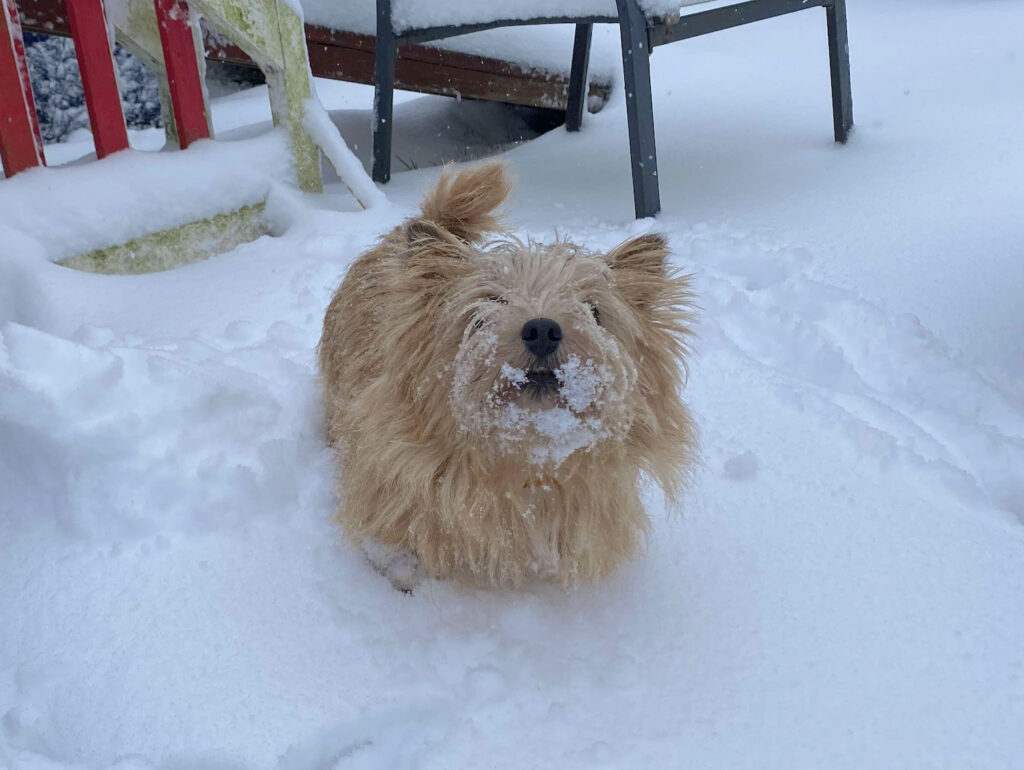
If it snows keep an eye on your dog’s fur, especially if your dog has lots of fur on their legs, paws, tail or under the belly. Snow can quickly stick to the fur and then more snow sticks to that and it doesn’t take long if the snow is a few inches deep at least for dogs with longer fur to have multiple snow balls attached to them. These will be heavy so feel horrible on the skin and fur but also will keep the body colder so not ideal for puppies, older dogs, dogs with joint issues or dogs who get cold anyway!
We were recently asked to help contribute to an article on Newsweek online about how different dog breeds may need adjustments on their walks at specific times of the year- if you’d like to read it check out DOG WALK SEASONS ARTICLE
I hope this blog was informative for you – you are very welcome to forward on to someone who has dogs that might benefit from something here as well.
Enjoy your walks with your dogs whatever the season!
Joe, Merlin, Ripley and Pepper Potts x