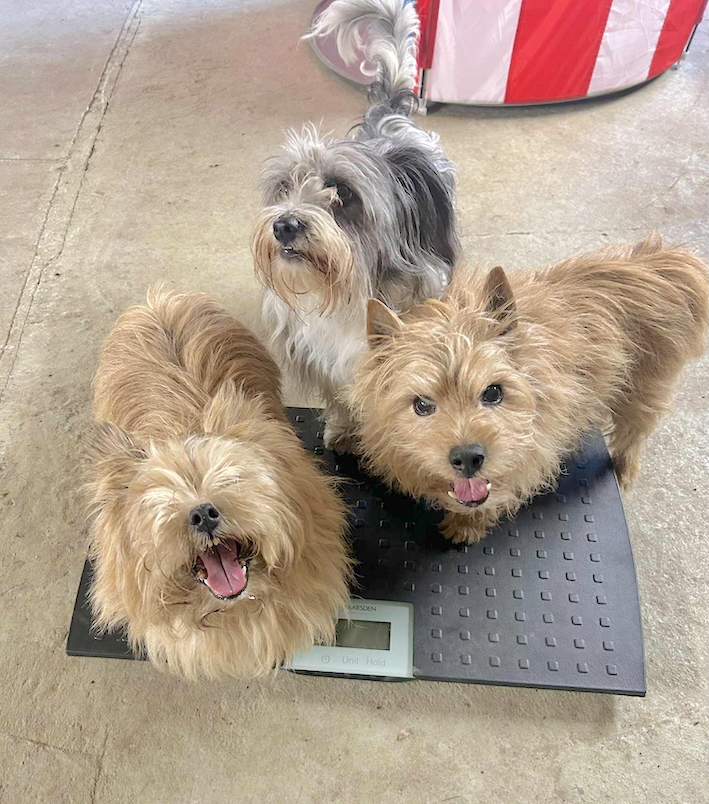
During the winter and spring months dog owners as well as their dogs can find it less desirable to go out in as regularly, resulting in shorter walks, less regular outings and less overall activity.
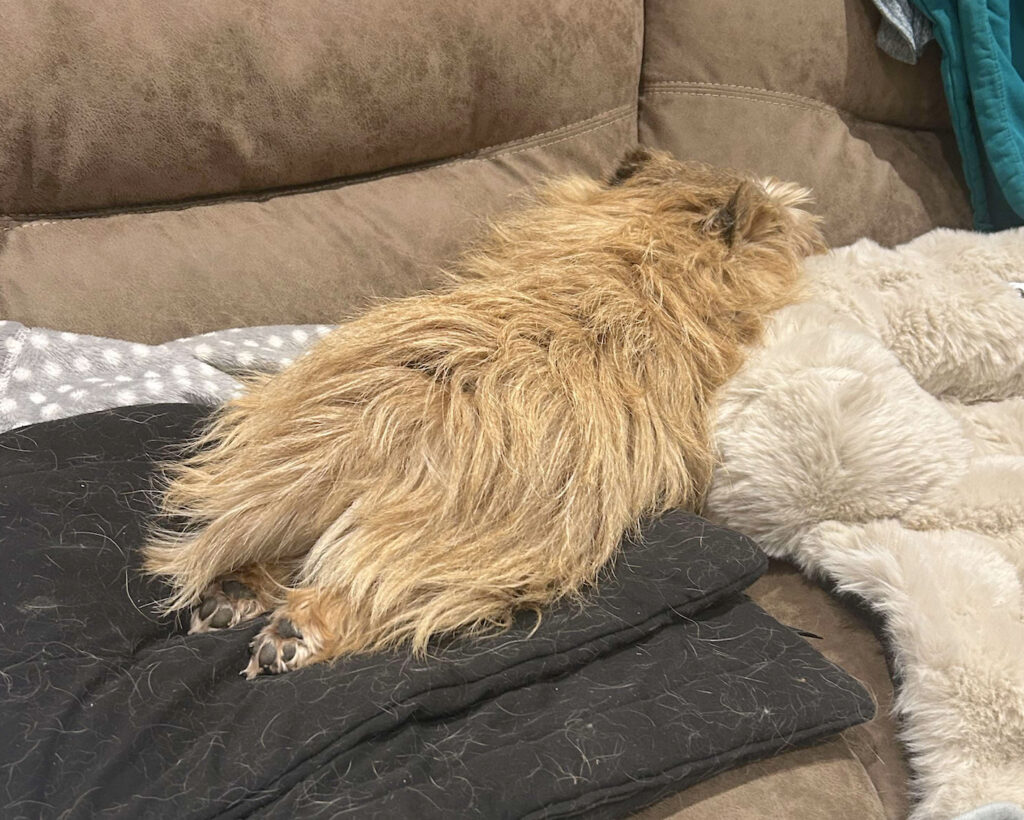
An online survey by HeatstrokeDogs.com of over 3,000 UK dog owners about walking dogs gave percentages of different weather that caused them to think twice about going for a walk. The survey results were also used in research by National Library of Medicine:
- 64% of dog owners in the UK walk their dogs less due to ice conditions
- 48.2% of dog owners go out less due to cold weather
- 23.3% of dog owners reduce the number or length of walks due to the rain
I can completely understand why walks and days out with our dogs are not attractive when the weather is bad! However, more often than not the missed or reduced walks are not replaced with something else leaving dogs with less physical exercise, less stimulation and no outlets for energy over the winter and spring months.

It’s not always owners that don’t want to go for a walk though – I know plenty of dogs who refuse to leave the house if there’s rain, let alone snow! Other reasons dogs might not be walked as much in winter include dogs with arthritis, joint issues etc can feel more pain when they are colder so staying indoors is much better for them, as well as there being less places to take dogs for dog shows, training days and dog competitions compared to the warmer months.
There are also genuine safety concerns from dog owners over walking our dogs in the evening after work as it’s dark and places are quieter. This is reported by mostly female owners but it applies to men too.
So, what can we do to help our dogs continue to be active and healthy when being outside isn’t always the best option? Dog activities can take place all year round in indoor training venues, like ours in Ardleigh, and give dogs homework to practise in their own homes. There are also many online training options too. Ways to keep dogs active without usual walks include Tricks Training, Scentwork, creating Obstacle Courses around the home and my favourite of all, Fitness and Conditioning for dogs.
What is Fitness and Conditioning for dogs?
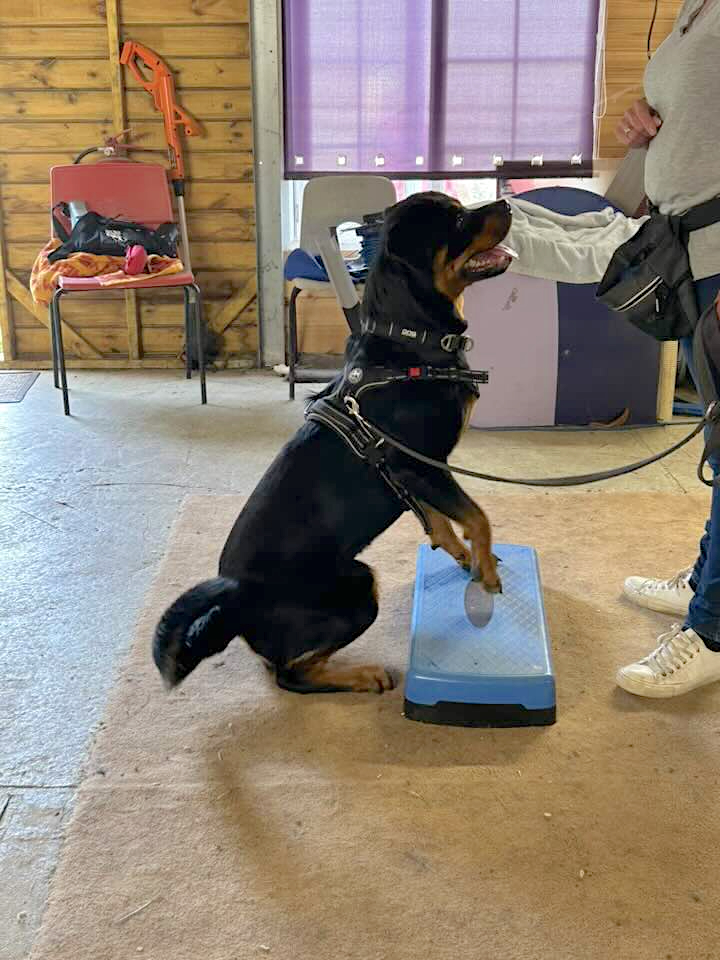
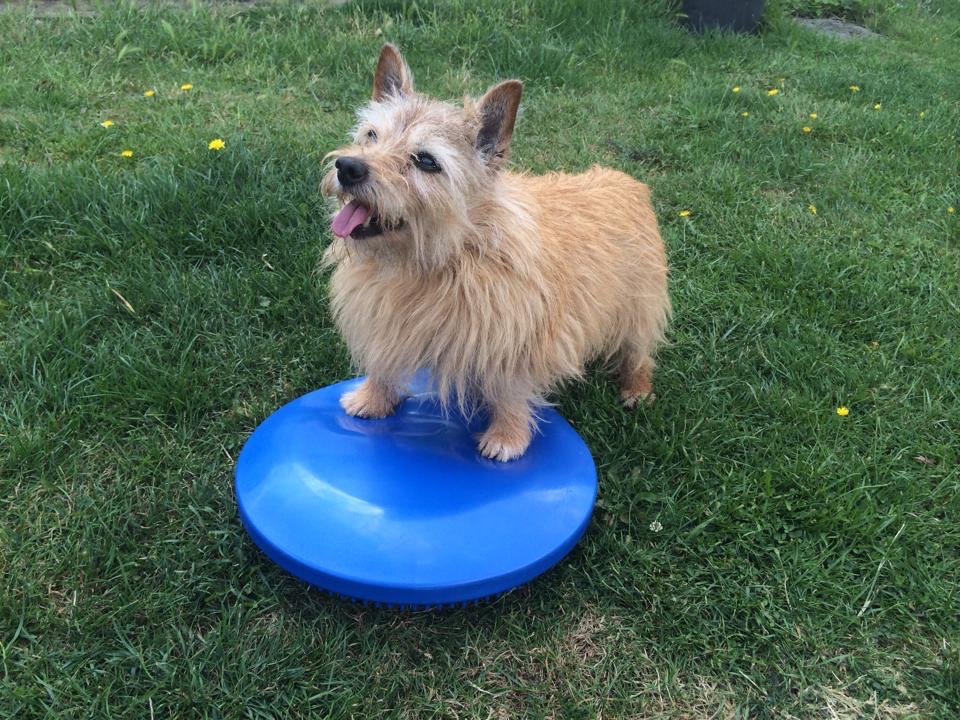
Fitness for Dogs and Canine Conditioning focus on working a dog more steadily and productively then general sports, with exercises to target specific muscle groups, tendons, ligaments and keeping joints moving too. Exercises also help with confidence, balance and coordination, body awareness, injury prevention, injury identification and strengthening.
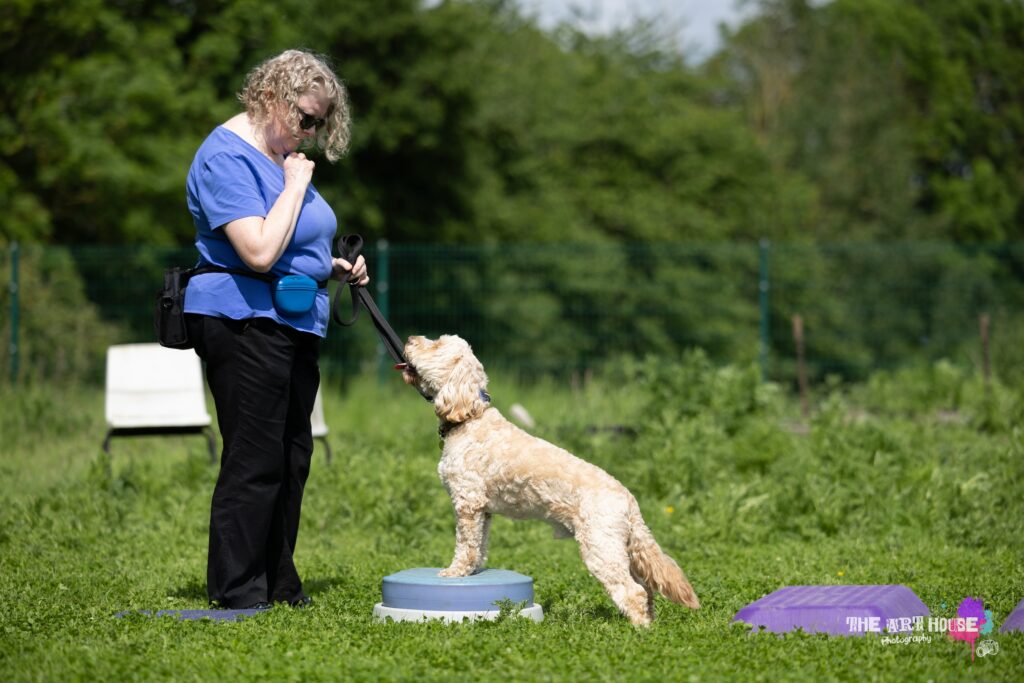
There is no set age to begin fitness with your dog; there are exercises that are puppy safe, good for teenager dogs, great for adults and work to help mobility for senior dogs. You don’t need to wait for your dog to have an injury or find out they are overweight to begin working on their conditioning!
Areas of Fitness include:
- Warming up slowly to stretch the body and prepare it for activity
- Strengthening exercises to keep the body moving well for longer, including after illness or when older
- Body awareness exercises which help dogs have less accidents, be more agile in sports
- Various textures, heights, movement to help with confidence building and coordination
- Specific exercises to help areas of the body showing weaker muscles etc or to prevent issues starting when young
- Cooling down at the end to prevent stiffness or overdoing the exercises.
Fitness for dogs is not only productive but also a lot of fun for dogs to work on; with a wide variety of types of exercise to the different equipment used and the mental challenges presented of working out how to hold a position or how to navigate something dogs really enjoy working on the conditioning exercises and get much more out of it then strong and fit bodies – they get to strengthen their minds too!
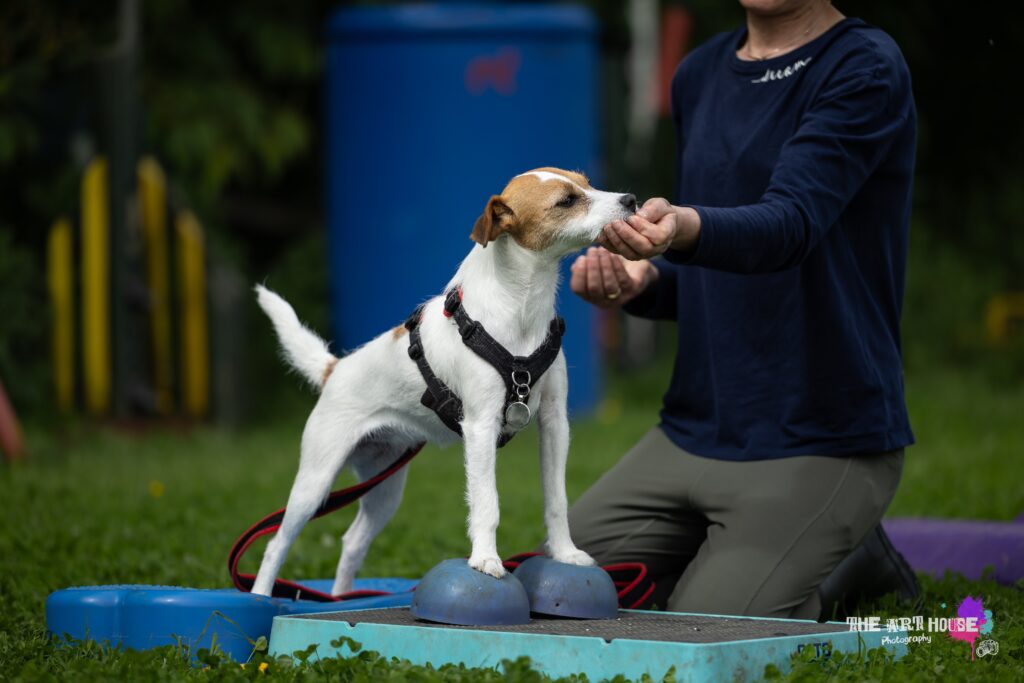
Is it expensive to set up everything needed?
There is no special equipment needed for dog fitness – unless you choose to purchase some of course! I have lots of specific dog fitness equipment as I work with a lot of dogs and need to have long lasting, heavy duty equipment that works for all shapes and sizes of dogs as well as all temperaments too. However even I use household items with my own dogs sometimes and there are so many ways exercises can be reproduced at home safely and effectively with items you may already have.
At first you really just need a nice space to work with your dog that is non slip. That may mean getting a yoga mat or non slip rug to use but right now, January, there are going to be so many yoga mats appearing on FB marketplace and other places for sale where the usual ‘new year new you’ fitness sign ups decide yoga mats aren’t needed so you can usually grab a nearly new one for about £3-£5.
Initial equipment usually includes something for front paws up to go on for several types of exercises. This might be a bottom stair, a shoebox, a fitness step you already have, a piece of wood or even a non slip dog bowl upside down! We may look at going around an item as part of warming up but this can be two boxes or chairs, a dustbin and a welly boot. You don’t need to buy a load of cones!
You also don’t need to spend hours each day on fitness; it is always far better to focus on quality over quantity so doing fewer repetitions but better will get your dog the most results. Spending 10 mins a few times a week working on exercises that suit your dog will build strength, balance, muscle tone to support joints, encourage your dog to think about their body placement such as paws and there are always more exercises to learn and ways to adapt them as your dog becomes stronger.
I worry my dog will get huge muscles
Don’t worry dogs don’t become body builder style models doing this kind of fitness. We don’t use weighted vests, pull heavy items etc. The muscles we work are to help support other muscles, the joints, help the core area stay strong and to keep tendons and ligaments able to do their jobs too.
Conditioning Training can help puppies build confidence and learn more about their body awareness to prepare them for the outside world. Teenage dogs can learn steadiness and how to focus while being aware of their own body positioning which has a knock on effect with bounciness and being unable to settle and attention seeking like barking. Adult dogs can prepare for their future by protecting their bodies and becoming stronger overall which helps with recovery after illness or surgery, reduction of joint issues from wear and tear and ability to take part in dog activities for longer. Senior dogs benefit from reduced discomfort from joint issues, muscular weakness and other ailments that can be associated with older dogs. They can also regain mobility or keep current mobility for longer. Studies have also shown that activity and fitness for older dogs helps with brain function to slow down onset of doggy dementia.
Keeping our dogs healthy over winter has benefits during summer when we want to go for longer walks, take our dogs on more adventures, day trips, try sports, visit new terrain etc. Also bear in mind that dogs who struggle with the warmer temperatures will find it even harder if they gain weight in winter. Dogs that are usually fine with heat may struggle with additional weight gain.
For a look at a foundation short workout to try with your dog visit this link on our Youtube channel which was created a few years ago but is still a favourite introduction – please note this has been created for dogs who do not have diagnosed joint issues such as hip dysplasia, cruciate ligament issues or back injuries. If you know or suspect your dog has any physical issues please check with your vet or specialist before starting canine fitness.
https://youtu.be/59ZDs2nhXOE?si=jG_F7Oy3IiwH1o93
To take part in one of our free online dog fitness introduction challenges keep an eye on our social media and website:
https://www.dogtrainingessex-suffolk.co.uk
https://www.facebook.com/dogtrainingforessexandsuffolk/
https://www.instagram.com/cassntay/
If you do try some fitness exercises with your dog we would love to hear how they get on! We also have great free downloads you can use too. See our downloads section :
https://dogtrainingessex-suffolk.co.uk/dog-fitness-your-free-baseline-assessment-tool/
Enjoy time with your dog!
Joe Nutkins
Certified Professional Canine Fitness Trainer